


Magento
B2B platform
We build advanced wholesale sales platforms that integrate your ERP, automate sales processes and handle individual terms for every customer.

















This is how we help
We build and grow scalable B2B e-Commerce on Magento.

Technology consulting
Not sure whether Magento is the right choice? Need support with IT architecture or sales strategy? We have the skills and experience to help. Book a consultation!

Migrations from other technologies
We migrate B2B platforms from PrestaShop, IdoSell, WooCommerce, Atomstore, 2click, CStore, Intradus and Shoper, among others.

Platform from scratch
We handle Magento implementations from A to Z. We support you with UX design, SEO, business strategy, IT architecture and sales growth.

Project recovery
Is your agency letting you down? Were you advised to choose the wrong platform? All is not lost. We specialize in taking over B2B e-Commerce projects that suffer from blown budgets, poor-quality technology or a lack of business vision.

Platform development
Magento 2 lets you develop features with virtually no limits. We can extend your e-Commerce with, for example, a sales rep dashboard, an advanced logistics algorithm or fast recurring purchases. The sky’s the limit.

Magento B2B integrations
We integrate your e-Commerce with systems that have no publicly available integrators. We connect your Magento B2B platform with ERP, PIM, CRM, OMS and WMS systems, among others.
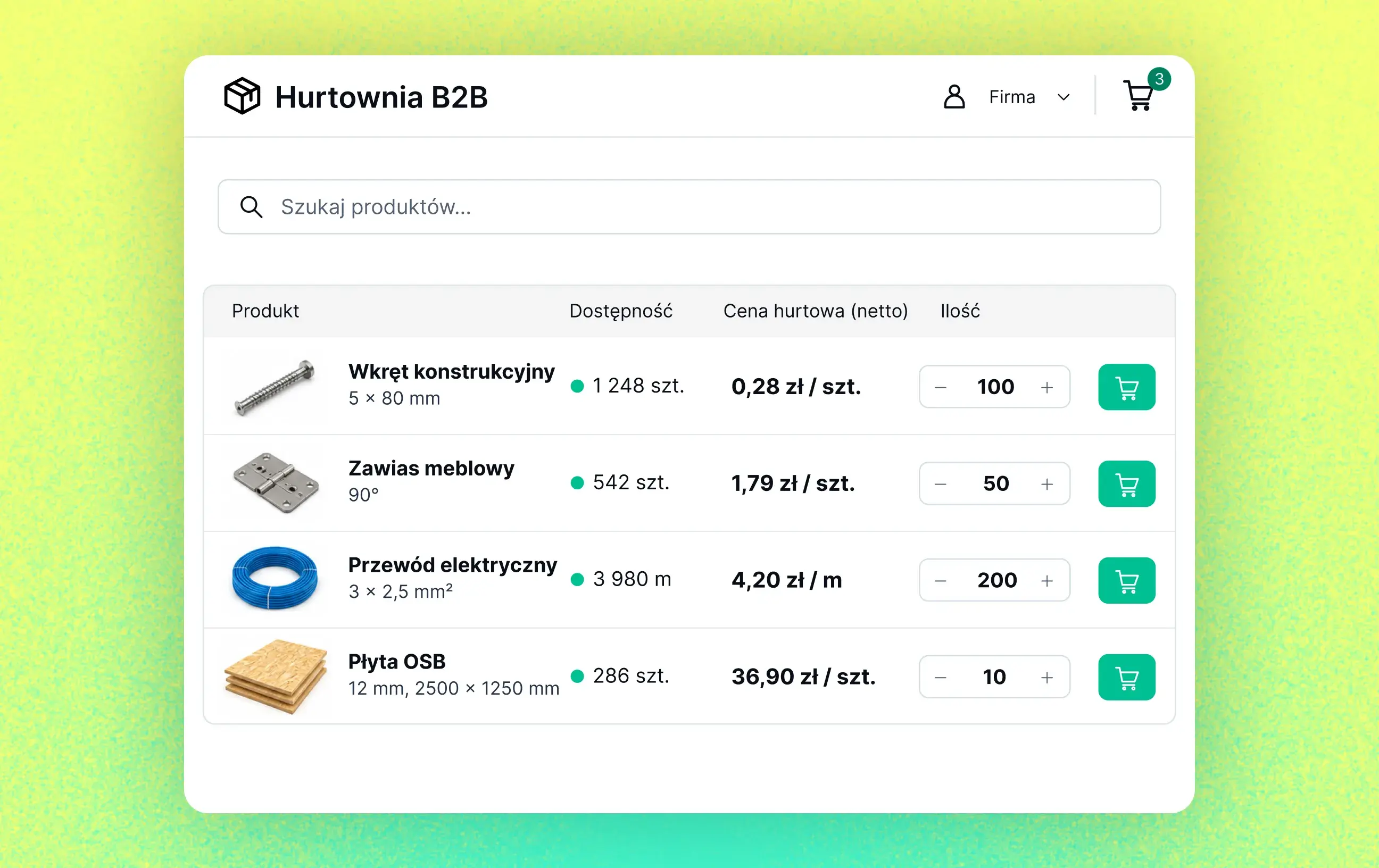
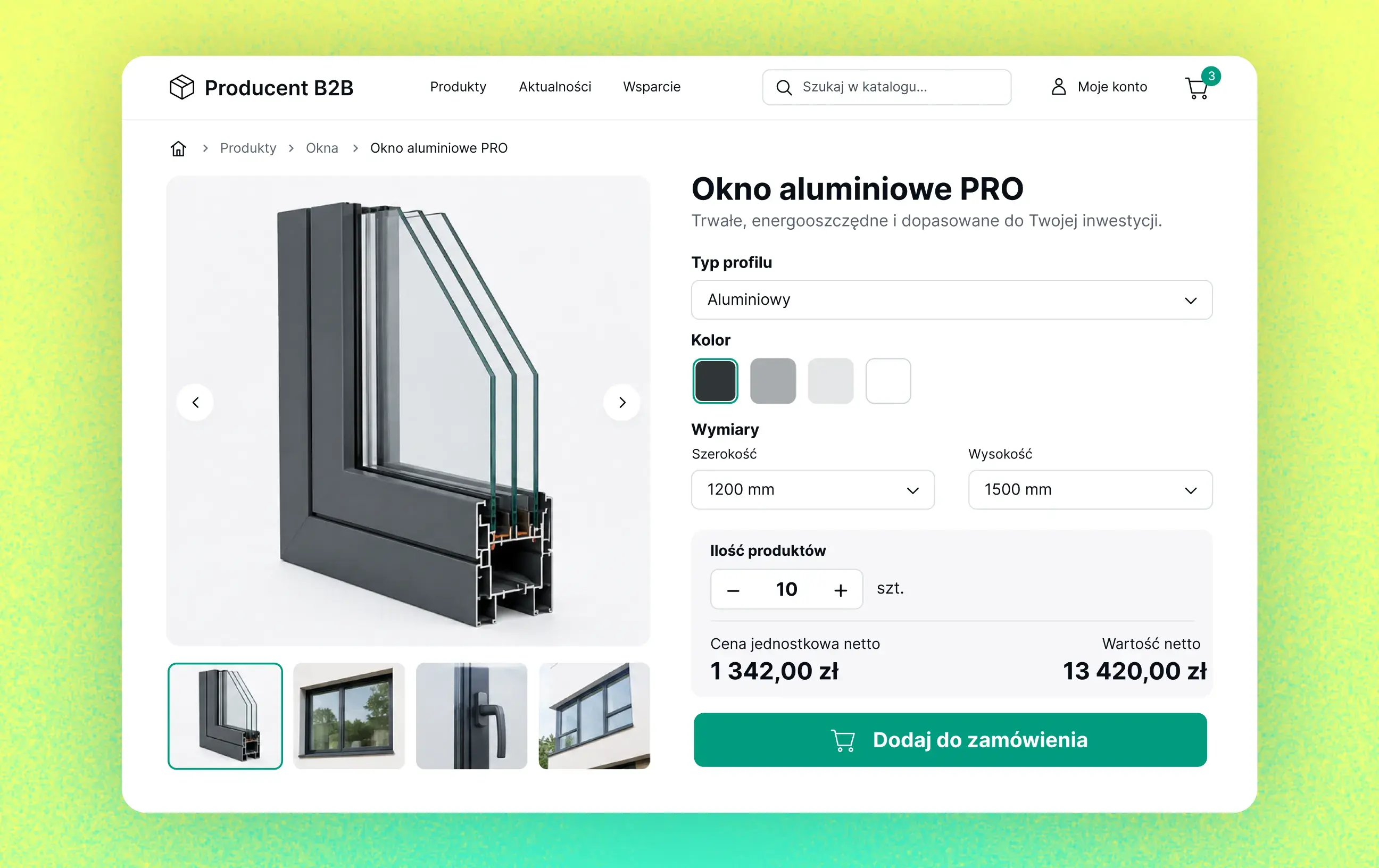
Selected Magento B2B implementations
Explore our most interesting case studies

Meringer B2B platform
The largest medical products marketplace in Poland. More than double the sales, dramatically faster site performance.


An e-Commerce agency with no surprises
We asked our clients why they choose Satisfly. Here are their answers:
-
Strict budget control
No compromises here. Projects that cost hundreds of thousands of zlotys and run for months are especially prone to overruns and unexpected costs. We watch the budget relentlessly so that surprises like these never happen.
-
One team
Implementing a B2B platform is a strategic project for any company. With changes on this scale, full commitment is essential, both on your side and on ours. We know how to form one well-coordinated team with you, working toward a shared goal.
-
E-Commerce know-how
If you’re looking for a software house… we’re not one. Satisfly is an e-Commerce agency, because we combine technology expertise with sales, UX, marketing and business skills.

What our client gained with a Magento B2B platform:
faster website
higher sales year over year
orders in 3 weeks
Meet B2B Suite
by Satisfly
Every client has different business requirements, but that doesn’t mean every Magento B2B platform has to be built from scratch.
We work with our own set of Magento modules that handle EU VAT validation, quick ordering and account permission levels, among other things.
We have also created standardized design templates for industries such as FMCG, medical, workwear and safety, and tools.
As a result, the work takes less time, so it costs less.
Magento B2B features
Selected features we can implement for you:
-
 Price Per Customer
-
 Backorders
-
 Business customer verification
-
 Sales representative dashboard
-
 Free gifts in cart
-
 Products for selected customers
-
 Showroom integration
-
 Product quantity calculator
-
 Deal of the day
-
 Product labels
-
 PunchOut catalog
-
 Multistore: one admin, many stores
-
 Customer panel
-
 Shopping lists
-
 Security module
-
 ERP integration
-
 PIM integration
-
 Intelligent search engine
-
 High-converting product page
-
 B2B payment methods
-
 Offer builder
-
 Negotiation module
-
 Quick purchases
-
 Multi-warehouse support
-
 B2B customer permission levels
-
 Convenient product listing
-
 Advanced logistics
-
 Substitutes for unavailable products
-
 Advanced price management
-
 Discount levels
-
 Product bundle creation
-
 AI assistant
Benefits of implementing Magento B2B
Your client
They can shop at any time of day or night, from any device. With different levels of account access, the work of their buying committee and administration becomes simpler.
Sales department
It gets a platform built on scalable technology that can keep growing. As a result, it can offer customers… whatever they need. Credit limits, quick orders, multi-cart shopping, backorders… the list goes on.
Finance department
It will appreciate that Magento requires no subscription or license fees. On top of that, there’s no vendor lock-in, a situation where you can’t change your implementation agency.
Marketing department
It has plenty of room to work with. Magento allows unrestricted expansion of marketing features: newsletters, promotions, discount levels and offer builders.


Free consultation
Not ready to work with us yet? We can talk with no commitment. Here’s our time, just for you.
Book a consultation

B2B Platform for the Medical Industry
Magento implementation for Meringer, which has led to exponential sales growth… just like customer satisfaction on the platform.
- outdated design
- incomplete product offering
- slow loading times
- no pricing policy implemented
- complicated purchasing process
- modern design and UX
- full product offering
- lightning-fast speed
- personalized pricing
- customers buy the way they like and need
Magento B2B ecosystem
See how the platform fits into your organization
-
ERP
Whatever ERP system your organization uses, we can integrate it smoothly with the platform.
-
PIM
PIM is a system that organizes product information: descriptions, media, specifications and attributes. It’s especially helpful when you plan international expansion or develop omnichannel sales.
-
OMS
Your Magento B2B platform can be integrated with external Order Management System software such as Base or Apilo.
-
WMS
Efficient logistics means huge savings. We’ll connect your e-Commerce with the WMS of your choice.

Magento B2B integration with ERP systems
We integrate Magento-based B2B platforms with leading ERP solutions:
Comarch Altum
Connecting Magento with Comarch Altum links your online store with Comarch’s central trading environment and keeps the product catalog, stock levels, prices and transactions flowing smoothly. We build the data flow through the API or our own integrator, choosing the option that fits the size of the project.
It’s a great fit for retail chains and distribution companies working in an omnichannel model that need a single source of product information.
Microsoft Dynamics 365
We integrate the Magento platform with Microsoft Dynamics 365 (Business Central or Finance & Operations) through the REST/OData API. We provide a two-way exchange of offers, price lists, stock availability, customer accounts and transaction documents.
This option suits companies with a global reach that want to connect their e-Commerce with an advanced cloud ERP.
Enova 365
We integrate Magento with enova365 using Soneta’s web API. The online store automatically pulls current stock levels, prices and product records, and orders with customer data go to the ERP without manual entry.
The flexible, modular structure of enova365 makes the system easy to extend, which small and mid-sized trading and manufacturing companies appreciate.
Gardens
We connect with Gardens software through its API, automating the transfer of product availability, price lists and shopping carts between the online store and the logistics module. Stock levels update in near real time.
At Satisfly, we integrated Gardens with the Briju 1920 online store, connecting the brand’s digital sales with its warehouse processes.
Comarch Optima
Connecting Magento with Comarch ERP Optima is one of the most popular solutions on the Polish e-Commerce market. We transfer item records, stock levels, price lists, carts and documents using the Optima API or a tailored integration module.
Optima supports B2C and B2B transactions for small and mid-sized companies well, and connecting it with Magento streamlines sales processes and invoicing.
SAP ERP
We base Magento and SAP ERP integration on a middleware layer and programming interfaces (REST/OData, IDoc, BAPI). Two-way communication connects product catalogs, stock levels, individual pricing conditions and transactions.
This approach is designed for large businesses whose online sales must work closely with logistics and finance.
Streamsoft
We exchange data between Magento and Streamsoft software (Prestiż / Pro) through its native API. We transfer product specifications, stock levels, price lists and orders, taking dedicated discount policies into account.
Manufacturers and distributors looking for close integration between online sales and warehouse operations often choose this model.
Subiekt
We connect Magento with Subiekt (GT and nexo) through Sfera or external integration software. The online store pulls stock levels, prices and product SKUs, and orders reach the ERP as ready-made sales documents.
At Satisfly, we connected the Meringer B2B wholesale platform with Subiekt this way, with an efficient integrator that keeps the data continuously in sync.
Symfonia
We sync with Symfonia ERP through its API, connecting product databases, stock levels, prices and customer orders. Transaction data goes directly to the ERP, so invoices are issued faster.
It’s an excellent option for small and mid-sized trading companies that sell both retail and wholesale.
Teneum
We connect the Magento platform with Teneum software through APIs. We transfer product records, stock levels, price lists and carts, adapting the exchange structure to the specific company.
We recommend this solution for mid-sized companies that plan to unify multichannel online sales on a shared ERP system.
Vendo ERP
We connect Magento with Vendo ERP through its API, linking the assortment, stock levels, price lists and B2B and B2C transactions. We set the system up to handle individual price lists for selected customers.
At Satisfly, we connected the Clarena B2B platform with Vendo, fully automating the flow of documents between the store and the ERP back office.
Wapro
Integrating Magento with the WAPRO suite (WAPRO Mag / ERP) is based on a two-way transfer of products, stock levels, price lists and transactions through the API. Sales documents are created in the ERP without manual intervention.
At Satisfly, we connected the Victoria Vynn online store with Wapro, linking the digital channel with the brand’s warehouse and accounting back office.
Comarch XL
Connecting Magento with Comarch ERP XL links your online store with an extensive enterprise-class system. We transfer product SKUs, stock levels, dedicated prices and order fulfillment, including advanced B2B wholesale processes.
At Satisfly, we connected the WK Dzik B2B platform with Comarch XL, linking the online wholesale platform with the company’s logistics and sales operations.
See other Magento B2B implementations
Portfolio

Magento B2B vs other technologies
Where Magento gives you an edge
Subscription store (e.g. Atomstore, 2click)
-
 monthly subscription
-
 independence from agencies
-
no full customization
-
limited to out-of-the-box features
-
hosting by the vendor
-
fast implementation, but only for basic features
B2B platform
on Magento
-
no subscription
-
independence from agencies
-
full customization
-
B2B features built-in or custom
-
your own server
-
usually a longer implementation
Custom software (built from scratch)
-
(usually) no subscription
-
dependence on the agency
-
full customization
-
B2B features custom-built
-
your own server
-
long implementation
Your path to success
Magento implementation plan in 5 steps.

-
First contact and a free consultation
- you talk with our consultant;
- you discuss your needs for building B2B e-Commerce;
- you fill out the brief.
-
Pricing and contract
- you receive an estimate of the implementation budget;
- you discuss it with us;
- we sign a contract.
-
Pre-implementation analysis
- we run workshops together and describe every platform feature in detail;
- at the same time, we work on page mockups under the guidance of our UX team;
- the analysis results in a more accurate quote for the Magento B2B project and a clearly defined scope of the MVP, i.e. the first selling version of the store.
-
MVP implementation
- we work on the frontend, backend and integrations;
- along the way, we meet regularly for status updates, daily standups and demos presenting progress;
- you have full control over the budget and the tasks being implemented.
-
Development and maintenance
- Magento support is provided by the same team that implemented your platform;
- for your peace of mind, we offer SLA packages;
- together, we plan the development of sales, marketing, SEO, technology and automation to ensure a solid return on investment.
We highly recommend working with Satisfly. They’re a team of experts who not only understand e-Commerce but also advise on the best business solutions. The store rollout went smoothly, and the final result met our expectations—we got a fast, modern store equipped with many bespoke features tailored to our needs.
Piotr Kołata, Product Owner @Meringer
Working with Satisfly restored our faith in the agencies currently on the market.
The project didn’t start with code, but with analytical workshops and a thorough review of our processes — and that decided everything that followed. The migration of laneperfumy.pl from PrestaShop to Shopify Plus, together with a custom integrator connecting the store to our ERP system, was carried out in a single night: no rollback, no sales downtime, and not a single critical ticket in the first days after launch. In e-commerce, that’s the best possible recommendation.
Separately, I want to give credit to the people. We were given a stable, experienced team — across project management, front-end, and integration — that understood our business, spoke openly about risks, and delivered what it promised. The way we worked together was collaborative and concrete: a clear division of roles, predictable communication, and decisions made exactly when they needed to be.
Mateusz Anci, CEO @Ambra Lane Perfumy

It was a good choice! I especially appreciate how quickly we got on the same page — a start with no long ramp-up like that is rare. You took the project on in a tricky state and straightened it out — no drama, you simply did what needed to be done. I also particularly value the effective communication and the way you stuck to what we’d agreed on and to the framework of the collaboration.
Krystian Gagoś, Vice President of Growth @Hagi
We appreciated that the Satisfly team truly understood our business perspective. From the very beginning, it was clear they believe that close collaboration between our organizations is the only path to success.
Tomasz Cynar, E-Commerce Manager @Briju

Everything was delivered as it should be – on time and within budget. Minor inconsistencies did appear, but that’s to be expected in any implementation or even in day-to-day operations. To sum it up: 100% quality, 100% cooperation, 100% communication, 100% transparency, 1% bugs (fixed immediately).
Piotr Celej, Product Owner @Merida

I greatly appreciate the fast and flexible contact with the Satisfly team, the well-organized way they work, and their punctuality in delivering tasks. What’s especially important is the partnership-driven approach. We felt that our goals were shared and that our challenges were treated as a priority. As a result, the collaboration runs smoothly, and we have a sense of security and confidence that the growth of our store is in good hands.
Joanna Wegner, Marketing Manager @RawDecor

Satisfly helped us launch a completely new version of our store, which now allows us to grow B2B sales online with confidence. I also appreciate the team’s support with our rebranding and redefining the foundations of the Ampak brand.
Aleksander Hałaszewski, Co-owner @Ampak


Book a consultation
Free, no obligation. Time only for you.

FAQ
Ask and you shall not wander
For manufacturers and distributors that serve hundreds or thousands of customers, each on different terms. A typical situation: orders come in by email, phone and Excel files, sales reps retype them into the ERP, and customers call to check prices, availability or delivery status. A B2B platform moves this process to a digital channel. Customers see their own prices and stock levels and place orders themselves, and each order goes straight to the ERP. You’ll find more details on our pages for wholesalers and distributors and for manufacturers.
A subscription platform (e.g. Atomstore, 2click) is enough when your sales process is standard and you don’t plan major expansion. You pay a subscription and use the features available out of the box. Choose Magento B2B when you need individual trading terms, ERP integration and the freedom to develop the platform in the years ahead. As a rough guide, it makes sense from an annual turnover of about PLN 20 million, but how closely the platform has to fit your processes matters more than turnover. Custom software written from scratch pays off only for a very unusual process, because it lengthens implementation and makes you dependent on one agency. As open source, Magento offers full customization without that dependence.
Usually three. The first is the cost of service: sales reps and customer service lose time retyping orders and answering repetitive questions. The second is errors: prices, discounts and SKUs copied by hand lead to corrections and complaints. The third is the lack of self-service: customers can’t see their invoices, outstanding payments, order history or product availability. A well-implemented platform automates these areas, and sales reps can focus on relationships and selling instead of admin.
Adobe Commerce, the paid version of Magento, includes a B2B module with company accounts and user roles, shared catalogs, negotiable quotes, requisition lists, quick order, order approval workflows and payment on account within a credit limit. The Adobe Commerce license cost depends on the store’s turnover and usually starts at about USD 22,000 a year. Magento Open Source is free and comes with customer groups, price rules and multistore as standard. We add typical B2B features to it with our own Satisfly B2B Suite modules, with no Adobe license cost. That is why we implement only Magento Open Source.
Company accounts with multiple users (Organizations, Company Users) and permissions, individual price lists and payment terms, trade credit, quote requests and shopping lists for repeat orders, quick ordering by SKU or from a CSV or Excel file, order approvals on the buyer’s side, access to invoices and outstanding payments pulled from the ERP, and the option for sales reps to place orders on a customer’s behalf. Ready-made Satisfly B2B Suite modules cover most of them. During the analysis, we decide which features are critical at launch and which can be delivered in later stages.
Yes. Magento lets you create orders in the admin panel and log in to a customer’s account (the Login as Customer feature), so the sales rep sees exactly the same terms as the customer. The customer, in turn, sees their assigned account manager and support contacts in their account (Account Manager and Support Contacts module). For larger sales teams, we build a dedicated sales rep dashboard with a list of assigned customers, offers in progress, order history and an overview of outstanding payments.
Yes. On a single Magento instance, you can run multiple stores in different languages and currencies, with separate trade and tax policies for each market. You manage the catalog, customers and integrations centrally and adapt the offer, delivery methods and payments locally. We validate customers’ EU VAT numbers automatically in VIES (EU VAT Validation in VIES module). That is how the Clarena platform works, among others, in Polish, English and German.
Most likely, yes. We have implemented Magento B2B platforms in the medical (Meringer), FMCG (WK Dzik), cosmetics and hairdressing (Clarena, Activeshop), packaging (Ampak), books (Edu-Książka) and workwear and safety (Elmar) industries, among others. Price lists, logistics and ordering look different in each of them, so we design the platform around the processes of the specific company.
Yes. Magento 2 has extensive REST and GraphQL APIs and supports asynchronous queues, which makes it possible to build stable two-way integrations. From the ERP, we pull products, stock levels, prices, customers, credit limits, invoices and statuses, and we send orders and new customer data to the ERP. We have ready-made integrations with Comarch ERP XL, Comarch ERP Altum, Wapro, VENDO ERP, Gardens, Streamsoft, Teneum, Microsoft Dynamics 365, enova365, Subiekt, Symfonia and SAP, among others. For other systems, we check their capabilities during the analysis.
Usually four. The first is an ERP with a limited interface: we confirm the integration scope in the analysis and test the riskiest touchpoints with a short proof of concept before they go into the schedule. The second is inconsistent data, such as different prices or SKUs in several systems: we assign a single source of truth to each piece of data. The third is an ERP outage or downtime: we design integrations with automatic retries and an error queue (dead-letter queue), so no data is lost and the store keeps selling normally in the meantime. Monitoring raises an alert that names the system and the operation. The fourth is too broad a scope at launch: we start with an MVP covering the key flows, which are prices, stock levels and orders, and add further integrations in stages.
Each piece of data has a single source of truth. The ERP is responsible for customers, trading terms, outstanding payments and documents. The PIM, such as Akeneo or Ergonode, handles product data, descriptions, attributes and translations. The WMS handles stock levels, reservations and order fulfillment. Magento is the sales layer: it combines this data into an offer for a specific customer and takes orders. This split eliminates data conflicts and manual corrections in several systems at once.
Yes. A B2B platform almost always needs integrations with external systems. We help clients choose the right PIM or ERP, implement PIM (Akeneo, Ergonode) and deliver full technology integrations as part of the platform implementation.
Most B2B platforms need the same features, so we don’t write them from scratch in every project. We have 15 modules of our own in the Satisfly B2B Suite package, which we install and configure for your processes. They run on Magento Open Source and Mage-OS from version 2.4.7, with Hyvä and Luma themes. Thanks to them, implementation takes less time and costs less.
Company accounts: Organizations, Company Users, Roles and Permissions, Account Manager and Support Contacts.
Prices and offer: Contract Price Lists, Company Assortment, Shopping Lists and Offers, Product Labels.
Orders: Quick Add to Cart, Company Orders, Order Approvals, Team Budgets.
Finance and customer verification: Trade Credit, Company Data from GUS, EU VAT Validation in VIES.
An order placed in the store goes to the ERP automatically, with no retyping. Customers order quickly by SKU, from a CSV file or from a shopping list, and for non-standard terms they send a quote request, which the sales rep negotiates in the panel instead of over email. Statuses, documents and invoices come back from the ERP to the customer’s account. The sales rep stops being an order processor and focuses on growing sales.
Yes, with the right architecture. Magento 2 scales horizontally and uses OpenSearch for search, Redis for cache and sessions, Varnish for page cache, and asynchronous queues for imports and integrations. We run large imports through the asynchronous API and incremental updates so they don’t block sales.
Yes, we are a certified Hyvä and ScandiPWA partner. A PWA (Progressive Web App) makes the store faster and more comfortable to use on mobile devices, and the platform can be installed on a smartphone like an app. On ScandiPWA, we built the Ampak B2B platform, among others. Hyvä is a lightweight theme that we use when a platform needs a faster frontend than the standard Luma theme, and Satisfly B2B Suite modules are compatible with it. We choose the technology based on the scope of B2B features, development plans and the client’s strategy.
We have been in business for 14 years and have more than 120 successful implementations behind us, and our clients’ stores have generated a total of PLN 1.3 billion in revenue. We are rated 4.9/5 on Clutch, and on the technology side, we are a certified Hyvä and ScandiPWA partner. We have implemented Magento B2B platforms for Meringer (sales up 230% year over year), WK Dzik (2,317 orders in six months), Clarena, Ampak and Edu-Książka, among others. Our teams understand the realities of wholesale and advise on both technology and strategy.
With a pre-implementation analysis, a series of workshops with our analyst, PM and developers. We map the sales process from inquiry to invoice, write down the business rules used in the ERP, list the systems to integrate and decide what standard Magento will handle, what Satisfly B2B Suite modules will cover and what needs to be built. The result is a scope, architecture and schedule, based on which we give a binding quote. You can use the analysis document with us or with another vendor.
Our collaboration is based on daily contact with the client. Every project has a dedicated Project Manager who looks after deadlines, quality and day-to-day communication, and you work with the whole project team on one shared channel. We track tasks in a project management tool, so you have full visibility of progress, and project knowledge is documented, not locked in one person’s head.
A Magento B2B platform implementation usually costs more than PLN 150,000. A large B2B platform with ERP integration, a PunchOut catalog, PIM and a logistics module most often costs PLN 250,000–500,000. These ranges include ERP integration, and because we work with Magento Open Source, you don’t pay for a platform license. Costs are driven most by integrations, changes to the purchasing process and features that no ready-made module covers. We deliver typical B2B features with Satisfly B2B Suite modules, which significantly lowers the cost of implementation. We give a binding quote after the pre-implementation analysis. Read more on our Pricing page.
A typical Magento B2B implementation takes 3 to 9 months, depending on the number of integrations and the scope of features. Projects based on ready-made Satisfly B2B Suite modules take less time, because we don’t build standard features from scratch. We always recommend starting with an MVP, so sales start sooner and further features are added in stages. We launched the B2B platform MVP for Edu-Książka in 3 months, for Clarena in 4 and for Ampak in 5.

